Show log
Trauma VS Addiction || ft. Dr Rick Barrett
Clinical psychologist · Vermont & New York · 25+ years
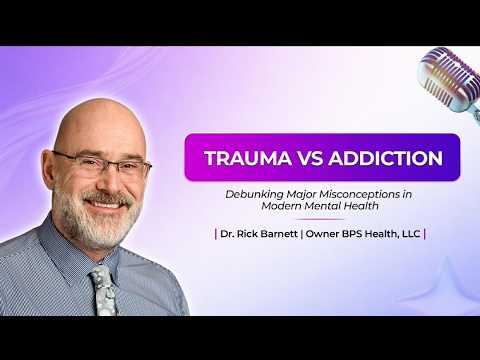
What we covered
- How Dr. Rick Barrett's own teenage struggle with alcohol and drugs became the doorway into a 25-year career in addiction and mental health
- The misconception he corrects most often: not everyone with a substance use disorder has trauma, and not everyone with trauma develops a substance use disorder
- What AI actually looks like inside his practice today — a consent-gated AI note-taker he still has to edit by hand, nothing more
- Patients who are already bringing ChatGPT into the room, unprompted, to talk through depression, anxiety, and addiction
- Why he testified in front of the Vermont statehouse on AI in healthcare, and the policy position he argued for
- His read on where mental health tech goes next — including an idea about holographic telehealth he floated live on the show
Moments worth your time
- The barber shop line. Asked about risk factors for addiction, Barrett reaches for a piece of plain-spoken field wisdom instead of clinical language: "You hang around the barber shop long enough, you're going to get a haircut."
- The statehouse position. Barrett doesn't want AI banned from mental health — he wants it fenced. "AI is like running water. It's like electricity." His case: you can't legislate it out of existence, so legislate the guardrails instead.
- "Two clinicians in the room." He describes patients showing up having already consulted ChatGPT about their depression or anxiety before the session even starts — a new baseline question he now has to ask every client.
- The hologram tangent. Asked where the field goes in five to ten years, Barrett doesn't reach for a policy answer first — he reaches for Star Wars, imagining a patient "beamed right into my office," AI and human presence working together instead of trading places.
In their words
"AI is like running water. It's like electricity."
"There are guardrails out there, I think, legally that can be instituted to help people and patients not take advice from a completely independent AI agent. That's smart policy, I think."
"How do we keep the human alive and thriving and well and integrated into the AI system — not the other way around."
Who should watch this
If you're a clinician who's already noticing clients quote ChatGPT back at you mid-session, this episode names the exact discomfort you're feeling and gives you language for it. It's also for anyone weighing whether AI belongs in a licensed practice at all — Barrett has already sat in front of lawmakers and made the case for where the line should go.
Put it to work
Barrett's real-world habit is a single check-in question, asked at intake or whenever a client references an AI tool: "How much are you using ChatGPT to help you with your problems?" In the next fifteen minutes, write three follow-up questions you'd ask after that one — questions that surface what the AI told the client, how much weight they gave it, and whether it steered them anywhere you'd want to know about. Keep the three questions somewhere you'll actually see them before your next session.
If you want a trainer with a healthcare background to help you build guardrails like this into your own practice — not generic AI advice, but privacy-aware structure from someone who's sat where you sit — book a Personal AI Workout.