Show log
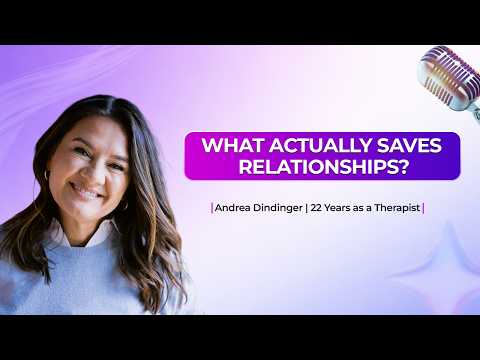
What happens when relationships break down, and can AI actually help?
Licensed marriage & family therapist · San Francisco
What we covered
- How Andrea went from asking her grandparents pointed questions at age seven to twenty-plus years as a licensed marriage and family therapist in San Francisco
- What actually happens in couples therapy — the "looping patterns" she helps partners break, and how a session-time repair becomes lasting repair
- Why her caseload shifted during and after COVID, and what she thinks AI has to do with the more recent shift
- Where she uses AI in her own life (meal planning, taxes, social content) versus where she's drawn a hard line (session notes, an AI listening tool a developer pitched her)
- Her honest read on whether ChatGPT or Claude can function as a therapist
- Her free 21-day relationship reset tool and how she's built a diversified practice around it
Moments worth your time
The transmission at the retreat. Andrea didn't choose therapy so much as receive it, mid-divorce, at a silent meditation retreat: "It was literally felt like a transmission from God or whoever... go back to grad school and become a therapist."
The walking sessions. One of the few genuine upsides she found in the pandemic: a set path she now walks with clients instead of sitting across from them. "It's actually one of the most profound things that has come out of COVID for my practice."
"The secret medicine and sauce." Her clearest articulation of what actually heals people in therapy — not the apology alone, but a client finally saying the hard thing directly to the person in the room with them.
Where she draws the privacy line. When a developer pitched an AI tool to listen in on couples sessions and generate feedback afterward, her answer was immediate: "If there's this machine that's in here listening to what you're saying with me, it no longer is private. And that... doesn't feel safe."
In their words
"I was born a therapist."
"It can source all of these different experts and give you this regurgitated really great response. But where it falters is there's not a human there behind it."
"Relationships take work, they take a lot of consciousness and they take a lot of attention. And it's like anything that needs nutrients."
Who should watch this
If you're a therapist or clinician quietly using AI for the admin side of your practice — scheduling, notes, marketing copy — but haven't drawn your own line on where it stops, this conversation gives you a clear, lived example of how one experienced clinician thinks about that boundary. If you're a couple wondering whether a chatbot can substitute for real repair work, Andrea's answer, and her reasoning, are worth fifteen minutes of your time.
Put it to work
Andrea keeps a running list of the ways she connects with people who can't or don't come in for a session: a newsletter, free resources, a 21-day relationship reset. Take fifteen minutes and write down the one thing your own practice or newsletter is missing between "book a session" and "do nothing." What's the free, low-friction resource your admin work could support if it weren't eating your whole week?
If that admin load is the thing standing between you and building something like Andrea's newsletter, that's exactly the gap the free master class is built to close — no session notes, no client data, nothing that touches privacy, just getting the back-office work off your plate so you have room for the parts of practice only you can do. Join the free master class.